








By Ouni Jaspher
Dokolo, Uganda — During the Live Broadcasts “LBS’s Straight Talk” Show on Wednesday, three senior officials from Dokolo Town Council and Adeknino Sub‑County in Dokolo district laid bare the challenges and powers vested in them to safeguard public health.
The senior Health Assistant in charge Adeknino Sub County George Ongom aka Ongom Lango warns that Dokolo’s food joints aren’t meeting public health standards.
He says if the Public Health Act Cap 281 (amended 2000) which empowers officials to regulate hygiene were strictly enforced, most restaurants and eateries would shut due to lack of staff testing, certification, and licenses among other requirements.
Ongom credits himself for moving eateries from Mayor’s Garden, a bird-infested area, to Market Street, reducing zoonotic disease risk.
He also decried that most lodges in Dokolo fall short of public health standards.
Ongom also slammed many Dokolo’s lodges for failing to meet health standards.
According to Ongom, his functions include outbreak control, home visits, support to VHTs, disease surveillance and health service planning and etc.
He reported that 87 % of households in Adeknino have toilets, while the rest lack them due to floods — the same floods that crippled boreholes, such as the one at Bata Island.
Patrick Ojilong the Environmental Health Officer and senior health inspector Dokolo Town Council, outlined his core duties: crafting budgets, accounting for funds, and vector control.
“I supervise net distribution, mosquito spraying, garbage management, school health inspections, VHT supervision and inspection of buses and lodges,” he said.
He warned that schools lacking “sanity facilities” can be recommended for closure under existing laws.
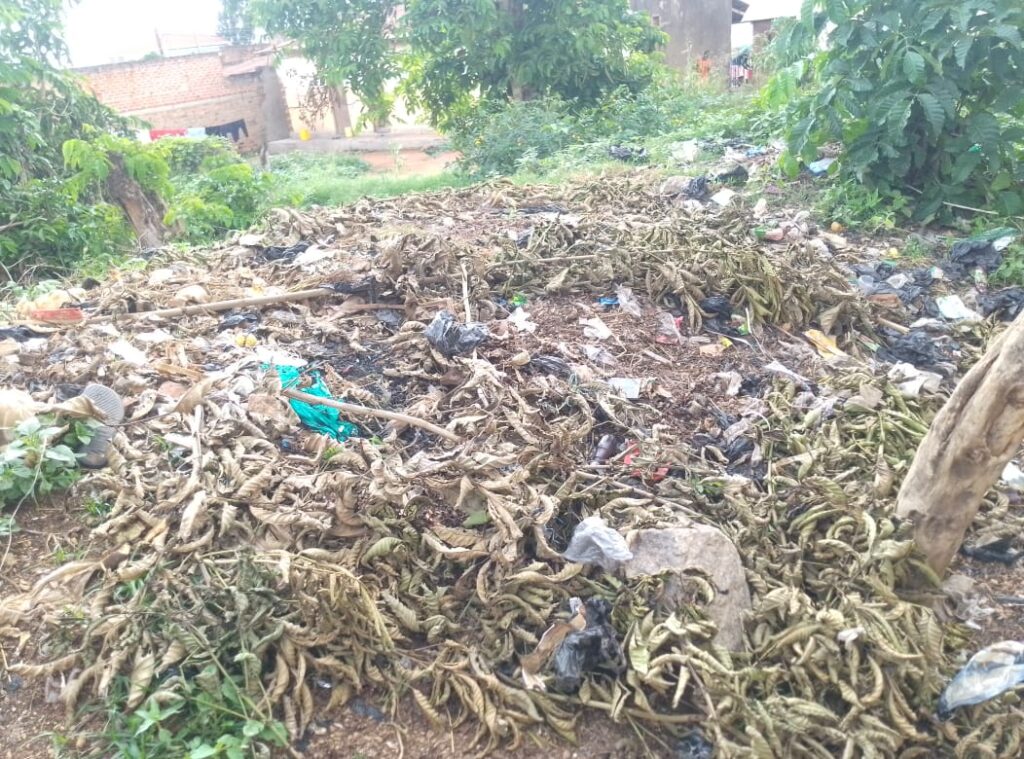
Ojilong also pointed to the town’s garbage crisis, noting that many residents still dump waste indiscriminately.
Ronald Ogwang, the Assistant Husbandry Officer in charge Dokolo Town Council, explained that animal health is governed by the husbandry office.
He noted that animal products can transmit diseases to humans and that unhealthy meat is being sold publicly.
Ogwang said though his office has conducted vaccinations across Dokolo, but he lamented low farmer turnout, hampering disease control efforts.
The officials’ candid remarks underscore Dokolo’s urgent need to tighten hygiene enforcement, improve waste management, upgrade facilities and raise community awareness — all pivotal to preventing outbreaks and protecting public health.