











The Minister for Public Service, Hon. Muruli Mukasa on 1st April, 2026, launched the declaration of income, assets and liabilities for Public Officers, and the User Guide to the Leadership Code Act, Cap. 33.
The User Guide aims to make the Leadership Code Act more user friendly in terms of giving clarity on the obligations of both Leaders and public.
The one-month declaration exercise for Public Officers which will end on 30th April, 2026, is a deliberate step towards reinforcing integrity, a reminder that public officers ought to be accountable because they hold offices on behalf of the public.
During the launch, the Minister reminded the Public Officers that declaration is a legal requirement and not an administrative burden like it had been misconstrued.
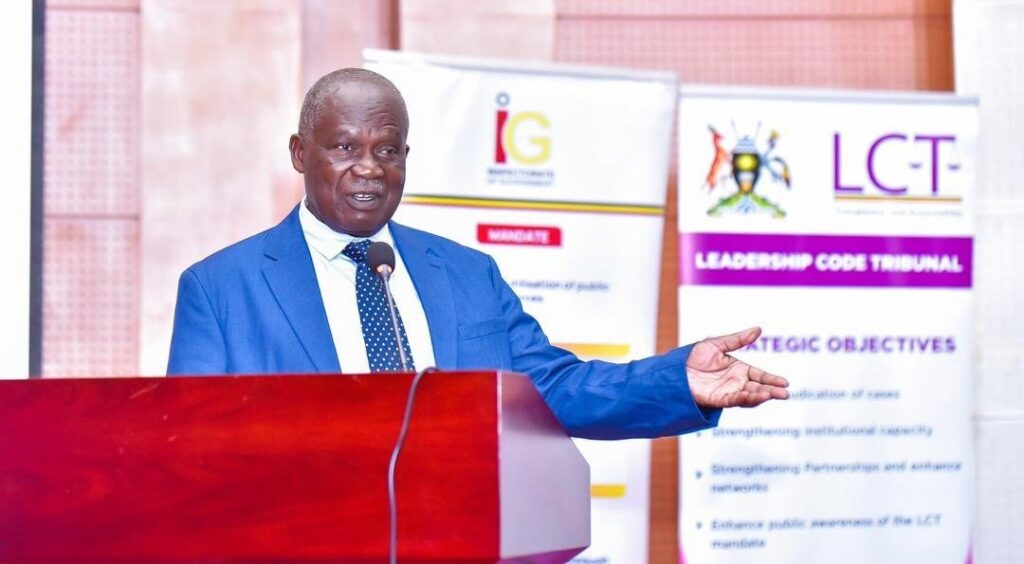
“When you declare your income, assets and liabilities you demonstrate honesty and accountability. It shows that you are a person of integrity and can confidently account for what you have without fear,” he said.
He assured Inspectorate of Government of the government’s full support in the enforcement of the Leadership Code Act across the public sector, a revelation that emboldens the IGG commitment to ensure a transparent and accountable public service which prioritises public interest in service delivery.
The Leadership Code Act requires specified public officers to declare their incomes, assets and liabilities to the Inspector General of Government every five years.
Public Officers are persons working in a Ministry, Department, Agency (MDA) or Local Government (LG) whose salary is paid by the Government of Uganda.Through the enforcement of the Leadership Code Act, the IG is nurturing a culture where accountability is not optional but expected.
The Minister for Ethics and Integrity, Hon. Rose Lily Akello, commended the Inspectorate of Government for its commitment to ensure that ethical standards among Public Officers are upheld through declaration.

“This is a very important period and all Public Officers should take this exercise seriously. We want Public Officers to be accountable and that’s why we want them to declare. Those who fail to declare will be prosecuted by the Leadership Code Tribunal because the law is very clear. I encourage all Public Officers to comply,” she said.
The Inspector General of Government (IGG) Lady Justice Naluzze Aisha Batala, said that the declaration exercise is not merely a statutory requirement but a cornerstone of good governance.

The declaration, Lady Justice Naluzze emphasised, serves as a constant reminder that transparency and accountability are not optional virtues in public service, but fundamental obligations which, when upheld, become the driving force behind efficient, timely and citizen-centered service delivery.
“Today’s launch reaffirms the unwavering commitment of the IGG to enforce ethical standards across the public service. Public office is a trust, and those entrusted with it must never prioritise personal interests at the expense of the citizens they serve,” she said.
The IGG added, “When Public Officers are aware that their financial status is subject to scrutiny, they are more likely to act with integrity, make decisions in the public interest and avoid practices such as bribery and undue delays that undermine service delivery.”
She allayed fears of the Public Officers on the declaration process, saying that the IGG has taken deliberate steps to make sure that the process is efficient and accessible.
The Chairperson of Leadership Code tribunal Roselyn Karugonjo Segawa said that simplifying the Leadership Code of Conduct is understood and upheld across all levels of Public Service.
“We hope that the user Guide will bring about a renewed commitment to implement the Leadership Code Act, enhance access to Justice and equality and restore legitimacy and trust in our institutions,” Karugonjo said.