March 10, 2026 – Pretoria – Guided by the First Lady and Minister of Education and Sports, Mama Janet Museveni’s strong advocacy for upholding the dignity and hygiene of Ugandan girls through global-standard, disposable sanitary products, South Africa’s VEB Group has committed to prioritizing single-use, biodegradable pads made from local banana fibers—adding value to Uganda’s agricultural resources while ensuring no compromises on quality or equality for African children.
This alignment emerged from a successful week-long delegation visit by VEB Group from March 1 to 7, 2026, led by CEO Samuel Abbey Ntswana and coordinated under the Economic Diplomacy (ECD) strategy of the Uganda High Commission in Pretoria.
The visit advanced Pan-African partnerships in manufacturing, agro-industrialisation, human capital development, skills training, sustainable solutions, and social impact, with a focus on integrating industry growth and social benefits.
VEB Group, a diversified African powerhouse with over 25 years of experience driving growth through agriculture, manufacturing, skills development, ICT, logistics, and legal services, aims to establish a mega presence in Uganda, building on its established training centres and investment models across Southern Africa.
A pivotal meeting with Mama Janet Museveni at State Lodge in Nakasero centred on partnerships between VEB and the Ministry of Education and Sports (MoES), where she directed the shift toward disposable pads, stating, “The dignity of the girl child is non-negotiable.Our children are as sensitive, they are as deserving… We must always seek solutions that ensure they receive products of the same standard used elsewhere.”

This guidance prompted VEB to adapt its eco-friendly hygiene portfolio, committing to produce biodegradable, single-use pads from 100% natural banana fibres in Uganda, promoting environmental sustainability, affordability, and reduced plastic pollution without sacrificing hygiene standards.
Such innovations align with ongoing Ugandan initiatives, such as BanaPads, a local social enterprise that has empowered rural women by producing low-cost, biodegradable sanitary pads from banana agricultural waste for nearly a decade, helping prevent school absenteeism among girls and fostering female entrepreneurship in remote communities.
The delegation, following the First Lady’s directive, engaged senior MoES technical officials from the Human Capital Development sub-sector at Embassy House in Kampala to refine these collaborations.

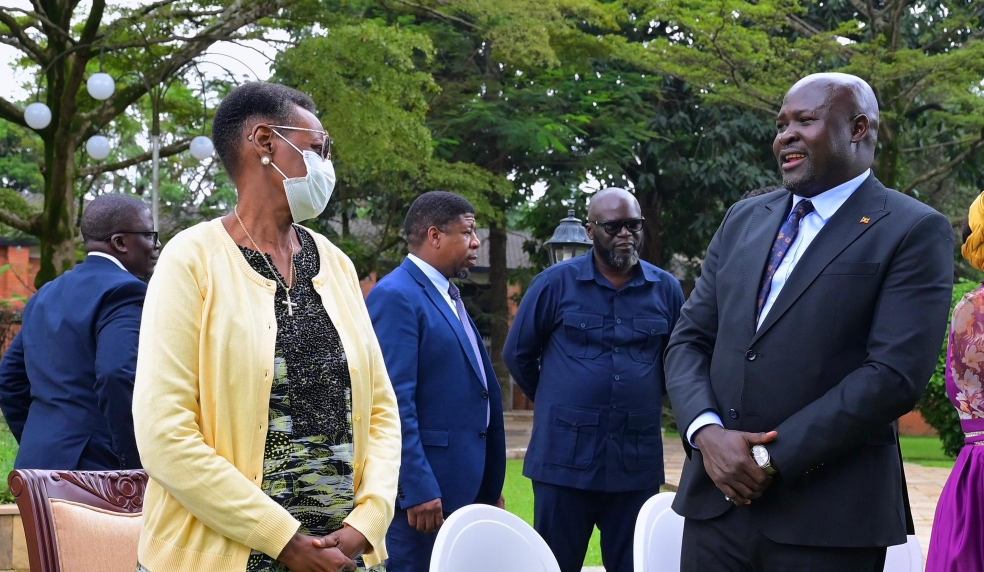
They also met with the Right Hon. Deputy Speaker of Parliament, Thomas Tayebwa, to discuss strategies for impactful contributions across critical sectors. Rt. Hon. Tayebwa, known for advocating accessible education and rural development—including calls for free internet access to educational resources for children in remote areas—welcomed the initiative, emphasising its potential to support youth empowerment and infrastructure growth in Uganda’s underserved regions.
Ambassador Paul Amoru, Uganda’s High Commissioner to South Africa, who led the delegation, described the visit as a milestone in bilateral ties, stating: “The High Commission remains committed to identifying, engaging and attracting FDIs from Southern Africa into Uganda.

” This effort underscores Uganda’s broader economic diplomacy strategy, which has boosted trade surpluses in the region and attracted significant FDI, positioning the country as Africa’s “Best Investment Destination” as recognised at the 2024 Annual Investment Meeting.
VEB Group’s integrated projects include establishing agricultural production farms, agro-processing facilities, waste-to-value systems, demonstration farms, and light and heavy manufacturing for furniture and mattresses.
These efforts aim to create rural jobs, enhance food security, develop value chains, boost export-ready agricultural production, and build industrial workforce capacity through youth- and women-focused training in areas such as textile manufacturing, equipment operation, industrial sewing, technical maintenance, product assembly, and quality control.
With an initial $5 million investment for nationwide and regional expansion—meeting Uganda’s FDI thresholds for foreign investors—VEB pledged 1 million disposable sanitary pads and 1 million biodegradable baby nappies, with the first consignment already en route to Kampala and the remainder to be produced locally using banana fibres. This builds on Uganda’s innovative use of banana waste, where researchers at institutions like Busitema University are refining banana stems into sustainable fibres for textiles and hygiene products, reducing environmental waste and creating economic opportunities.

Ambassador Amoru praised the outcomes: “These partnerships, inspired by the First Lady’s visionary leadership, exemplify how innovation can uplift communities while respecting dignity and sustainability.” VEB’s holistic approach—backed by OEKO-TEX® Global Standard 100 certification—ensures adherence to international quality and hygiene benchmarks.

By focusing on rural industrialization, youth employment, and strengthened agricultural supply chains, this collaboration supports Uganda’s vision for equitable growth and Africa’s development by 2040, amid strengthening Uganda-South Africa trade relations through summits and joint economic commissions.